 A healthy gut microbiome is a key component to good health.
But, there are so many –“omes” to understand . . . human genomics, metabolomics, toxigenomics . . . what does the suffix “–omics” actually mean?
One free online dictionary1 says that –omics is “the large scale study of biological entities”. So genomics, in the most simplistic terms, is the study of all of the genes of an organism; metabolomics is the study of the small molecules that are substrates (biochemical ingredients), products, or intermediates of metabolic reactions in an organism.
What is the Microbiome in the Body?
The microbiome refers to the full set of micro-organisms that inhabit a given site, most often (when discussing humans) the gut, but one might study the skin, oral, nasal/ lung or vaginal microbiomes. Each area has its own cluster of bacteria, or microbiota. Gut microbes make up the largest population within the human microbiome. When studying the microbiome, often the genetics of the microorganisms that live on us and in us, are the focus.
Consider the scope and complexity suggested by what we know of the human microbiome. We are now a decade beyond this frequently quoted factoid . . .
“The microbes that live inside and on us (the microbiota) outnumber our somatic and germ cells by an estimated 10-fold.”2
. . . meaning that, by this estimate, there are 10 times as many micro-organisms on us and inside us as there are cells of our own. More up-to-date information estimates an increased number of human cells, so rather than 10:1, the ratio of “them” to “us” may be closer to 3:1.3
But is the separation between us and our microbes a solid, or a dotted line, or is there a line at all?
While it may be clear genetically which is human and which is bacteria, or virus, or yeast, in fact, the connections between us and our microbes are numerous, complex, and intricately interwoven. Disruptions in the balance between health-promoting bacteria and bacteria that are associated with, or cause disease, can mean the difference between robust health and decades of chronic illness. Our gut bacteria digest things that we couldn’t digest without them.
Why is the Gut Microbiome So Important?
About 70% of our immune system is in our gut. Imbalances in the gut microbiome have been implicated in several health issues, and science is beginning to demonstrate that gut health affects overall health, including emotional and mental wellbeing.
For example, a systematic review (where authors assess in aggregate, multiple scientific papers that meet certain criteria) of the effects of probiotics on central nervous system function in animals and humans showed that several specific strains of what are generally considered “good bugs”: Bifidobacteria (longum, breve and infantis) and Lactobacillus (helveticus and rhamnosus), improved anxiety, depression, autism spectrum disorder (ASD), obsessive-compulsive disorder, and memory. 4
On the other hand, an increase in a bacterium called Prevotella copri, at the expense of certain good bugs in the gut, has been associated with new-onset rheumatoid arthritis . 5
Gut Microbiome Bacteria and Disease
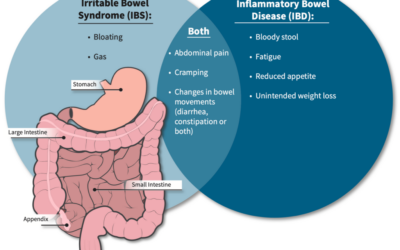
Changes in gut bacteria composition have been seen in Parkinson’s Disease, inflammatory bowel disease, schizophrenia, obesity and diabetes. Investigation into the gut microbiome is ongoing, and the pharmaceutical industry is positioning itself to benefit (see Reardon, Microbiome Therapy Gains Market Traction6). You can benefit as well, by supporting your microbiome.
The balance of good vs. bad bacteria
Try to add high quality fermented foods (sugar should not appear in the ingredients list) like the three Ks: kimchi, kombucha and kefir. Yogurt is great if you are not allergic or sensitive to dairy and you eat a high quality yogurt without a lot of added sugar, or thickeners. Feed your good bugs good prebiotic foods to help them thrive, like dandelion greens, avocado, jicama, Jerusalem artichoke, chicory root, peas and allium vegetables, such as garlic, onion, leeks, chives, and scallions. Take antibiotics and nonsteroidal anti inflammatory drugs (NSAIDS, like ibuprofen, naprosyn and similar drugs) only when absolutely necessary, and for a limited time period.
Researchers are studying the gut microbiome and its impact on digestive issues, the brain, cancer and degenerative diseases. Understanding the human microbiome and the balance between “good bugs” and “bad bugs” is proving to be an essential piece in our overall health, as individuals, and as inhabitants of this giant ecosystem we call Earth.
References:
1 -omics http://medical-dictionary.thefreedictionary.com/-omics Accessed October 17, 2016.
2 Turnbaugh PJ, Ley RE, Hamady M, Fraser-Liggett C, Knight R, Gordon JI. The human microbiome project: exploring the microbial part of ourselves in a changing world. Nature. 2007;449(7164):804-810. doi:10.1038/nature06244.
3 American Academy for Microbiology. FAQ: Human Microbiome, 2014. http://academy.asm.org/index.php/faq-series/5122-humanmicrobiome Accessed October 17, 2016.
4 Wang H, Lee I-S, Braun C, Enck P. Effect of Probiotics on Central Nervous System Functions in Animals and Humans: A Systematic Review. Journal of Neurogastroenterology and Motility. 2016;22(4):589-605. doi:10.5056/jnm16018.
5 Scher J, Sczesnak A, Longman R et al.Expansion of intestinal Prevotella copri correlates with enhanced susceptibility to arthritis. eLife 2013;2:e01202. Accessed October 18, 2016.
6 Reardon, S. Microbiome therapy gains market traction, in Nature News. http://www.nature.com/news/microbiome-therapy-gains-market-traction-1.15210 Accessed October 18, 2016.