For residents of Washington D.C., Maryland, and Virginia (the DMV region), mold exposure is not just an occasional household nuisance; it is a pervasive environmental hazard driven by geography and architecture. The region’s humid climate features high annual rainfall and heavy summer humidity, creating a natural baseline for moisture accumulation.
When this climate collides with the area’s historic infrastructure, the risk of structural mold amplification skyrockets. The DMV is densely packed with federal-era row homes, Victorian properties, and century-old commercial and government office buildings. These structures often rely on aging plumbing, outdated HVAC systems, porous plaster walls, damp crawl spaces, and historical brick foundations that naturally absorb groundwater.
According to guidelines from the World Health Organization (WHO) on indoor air quality, dampness and mold in such structures create a toxic indoor biome. Rather than causing simple allergies, chronic exposure to this moldy environment acts as a severe systemic toxin, driving chronic inflammation, metabolic issues, and cellular malignancies.
Facts on the Prevalence of Mold and Dampness
Residential Buildings: According to the National Institute for Occupational Safety and Health (NIOSH) and Lawrence Berkeley National Laboratory, approximately 47% of residential homes in the United States have documented evidence of indoor dampness, visible mold, or a perceptible mold odor. Private data from restoration networks often estimate the presence of localized mold spores in aging homes up to 70%.
Commercial Buildings: The EPA’s Building Assessment Survey and Evaluation (BASE) study revealed that 85% of commercial office buildings surveyed had experienced past water damage, and 45% had active, ongoing leaks capable of sustaining microbial amplification.
Schools : The U.S. Government Accountability Office (GAO) data indicates that 40% of U.S. schools suffer from systemic plumbing vulnerabilities, and 27% report persistent roofing leaks—the two primary drivers of hidden mold growth. (Related article: How Mold Can Impact Children’s Health)
Asthma and Respiratory Impact: A multi-study meta-analysis published in the Journal of Exposure Science & Environmental Epidemiology concluded that 21% of all current asthma cases in the United States are directly attributable to residential dampness and mold exposure.
Fungal Infection Burden: CDC data shows that serious fungal infections (which include infections from indoor molds like Aspergillus) account for approximately 75,000 hospitalizations, 13 million outpatient physician visits, and upwards of 7,000 deaths annually in the United States.
The Three Types of Structural Mold Exposure
Evaluating a building for toxic indoor environmental syndrome requires looking beyond visible growth, categorizing exposure into three distinct areas:
Air Mold
This consists of floating spores, microscopic fungal fragments, and mycotoxins suspended in the indoor air. Inhalation is the most direct pathway for these compounds to cross the blood-brain barrier and enter the body.
Surface Mold
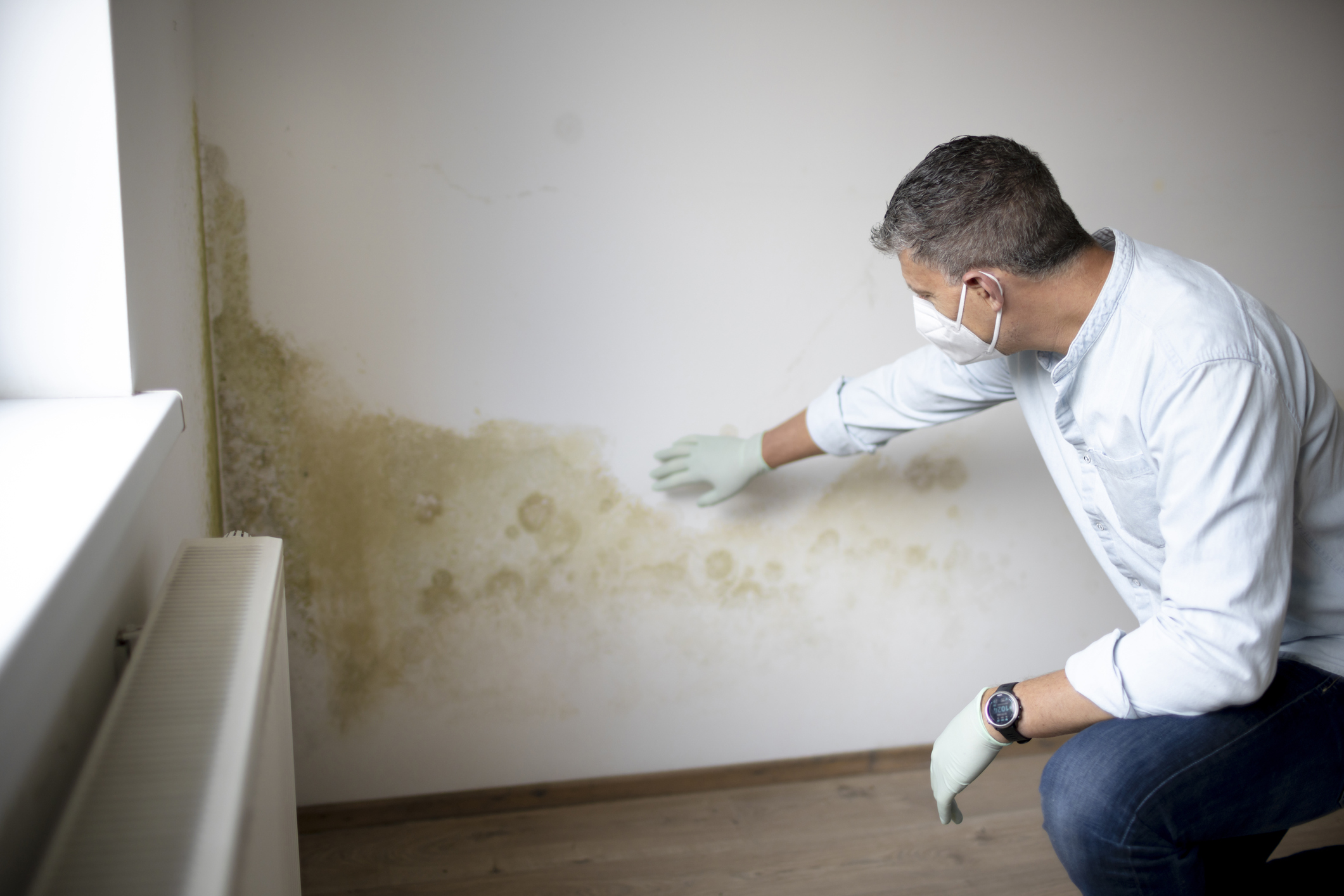
This represents the visible factory—the ugly dark or discolored patches on baseboards, ceilings, or damp basement walls. Every square inch of surface colonization contains millions of mature spores and concentrated pools of mycotoxins.
Hidden Mold
This is the most insidious form of contamination in century-old offices and homes. It thrives out of sight: behind wood and plaster, beneath floorboards, inside unlined HVAC ductwork, and within wall adjacent to slow pipe leaks. Hidden mold can off-gas massive quantities of mycotoxins that easily penetrate porous building materials, poisoning occupants who believe their environment is clean.
How and Why Mold Releases Mycotoxins
Mold is a microscopic fungus that utilizes a highly aggressive survival strategy to defend its territory.
Mold reproduces by releasing microscopic spores into the air. When a spore encounters a damp area—such as the drywall, structural wood, or plaster common in older DMV buildings—it germinates, extending thread-like structures called hyphae. These threads weave into a complex matrix known as a mycelium.
As the mold colony establishes itself, it secretes digestive enzymes into the building materials to feed. To protect this food source from competing bacteria the mold synthesizes chemical metabolites known as mycotoxins. Mycotoxins are chemical weapons designed to eliminate biological competitors.
The Triggers for Toxic Release
Mold colonies do not off-gas mycotoxins at a static rate. Mold production will escalate under the following conditions:
- Competition: Encountering other bacteria colonies triggers defensive mycotoxin production to neutralize the threat.
- Humidity Shifts: Rapid fluctuations in indoor humidity or temperature—frequent during the DMV’s transition seasons—signal to the mold that its environment is drying out. The colony responds with a massive, defensive release of spores and toxins to propagate.
- Structural Disturbance: Attempting to remediate or clean mold without professional containment physically destabilizes the colony, launching a concentrated cloud of toxins into the breathing zone.
Types of Mycotoxins in Mold Illness
The specific health outcomes of Chronic Inflammatory Response Syndrome (CIRS) and mold illness are determined by the precise blend of mycotoxins accumulating in the patient’s fat tissues and organs.
Black Mold Toxins, Trichothecenes (Produced primarily by Stachybotrys chartarum)
Often referred to as black mold toxins, trichothecenes are highly resilient, low-molecular-weight compounds capable of penetrating the skin, lungs, and blood-brain barrier. At the cellular level, they are potent inhibitors of protein synthesis. They may cause severe neurotoxicity, structural degradation of the blood-brain barrier, severe respiratory tract irritation, and the suppression of bone marrow, which directly lowers white blood cell counts.
Ochratoxins (Produced primarily by Aspergillus and Penicillium)
Ochratoxins are highly stable compounds that accumulate preferentially in the kidneys and liver. They disrupt cellular energy production and can cause profound, unmitigated physical fatigue, renal impairment, significant oxidative stress, and lowers the threshold required for localized mast cells to destabilize and fire.
Aflatoxins (Produced primarily by Aspergillus flavus)
While highly associated with agricultural storage, aflatoxins thrive in indoor environments with long-standing structural water damage. They undergo bioactivation in the liver and can disrupt liver function, elevating liver enzymes (AST/ALT/GGT), impairing lipid and hormone metabolism, and serving as a potent natural driver of hepatic malignancy.
Gliotoxin (Produced primarily by Aspergillus fumigatus)
Gliotoxin is a highly sophisticated chemical weapon optimized to disable human immunity. It targets and suppresses the activity of macrophages, neutrophils, and T-lymphocytes, preventing the host from launching an active defense against the fungal colony. Gliotoxin allows fungal spores to establish colonization within the human sinuses and respiratory tract, leaving the patient highly vulnerable to secondary bacterial overgrowths (such as H. pylori or SIBO in the gut) while forcing localized mast cells into a state of permanent allergic alarm.
Systemic Damage to the Body: Inflammation, Metabolic Breakdown, and Malignancy
While early medicine viewed mold primarily as a respiratory allergen, modern medicine demonstrates that mycotoxins cause profound systemic health issues by disrupting mitochondria, altering DNA, and driving chronic inflammatory states.
Metabolic Dysfunction and Insulin Resistance
Research indicates that chronic mycotoxin exposure is a significant, overlooked driver of metabolic syndrome and fatty liver progression. Toxins like Ochratoxin A directly damage mitochondrial membranes, creating mitochondrial decay and oxidative stress, triggering an upregulation of pro-inflammatory cytokines.
This can directly interfere with insulin signaling by inducing serine phosphorylation of Insulin Receptor Substrate-1 (IRS-1). This halts glucose transporters to cell membranes, causing severe, treatment-resistant insulin resistance, elevated fasting insulin, and abnormal HbA1c levels, while placing an immense inflammatory burden on the liver.
Malignant and Carcinogenic Pathologies
Certain mycotoxins are classified by the International Agency for Research on Cancer (IARC) as definitive human carcinogens. For instance, Aflatoxins bind directly to human DNA, causing structural adducts that lead to genetic mutations. This severely impairs the body’s natural cellular mechanisms, significantly elevating the risk of hepatocellular carcinoma and other cellular malignancies.
Mast Cell Activation and Histamine Overload Mimic Allergies
Beyond direct cellular toxicity, mycotoxins act as potent destabilizers of the immune system, serving as primary drivers of Mast Cell Activation Syndrome (MCAS) and profound histamine intolerance.
Mast cells line the body’s environmental interfaces, including the respiratory tract, conjunctiva, and gastrointestinal mucosa. When a patient chronically inhales air from a mold-damaged environment, mycotoxins bind to surface receptors on these mast cells.
Because mycotoxins are highly toxic, they bypass standard immune braking mechanisms, forcing the mast cells into a state of hyper-reactivity. The cells rapidly release a massive wave of histamine, prostaglandins, and leukotrienes into the bloodstream. Over time, the mast cells become permanently unstable, releasing inflammatory chemicals in response to minor, benign everyday triggers like basic foods, temperature changes, or mild emotional stress.
Furthermore, mycotoxins directly disable the body’s plumbing system for clearing histamine. Mycotoxins cause chronic localized inflammation in the intestinal mucosa, altering the gut microbiome. With mast cells continuously dumping histamine into circulation and the gut lacking the enzymatic capacity to clear it, the patient experiences systemic histamine overload. This manifests as widespread, multi-system inflammatory symptoms that mimic severe allergies but fail to respond to standard antihistamine therapies.
Symptoms & Red Flags for Mycotoxin Illness, CIRS or Mold
When these environmental toxins accumulate in a genetically susceptible individual over months or years, they manifest as a complex, multi-system inflammatory storm that is frequently misdiagnosed. Clinicians should maintain a high index of suspicion for chronic mycotoxin illness, Chronic Inflammatory Response Syndrome (CIRS), or secondary MCAS when a patient residing or working in the DMV area presents with:
- Refractory neurological issues including profound brain fog, executive dysfunction, and word-finding difficulties.
- Deep, unmitigated fatigue that cannot be restored by sleep or lifestyle adjustments.
- Chronic, migrating joint and muscle pain that lacks an orthopedic explanation.
- Systemic mast cell activation symptoms, such as sudden skin flushing, hives, unpredictable changes in heart rate, and widespread chemical or food sensitivities.
- Multi-system mucosal irritation including chronic sinusitis, atypical asthma, and unexplained gastrointestinal bloating or malabsorption.
Talk to our Functional Medicine provider with a 15 min free meet and greet to know more and embark on your journey to wellness. Contact NIHA @ 202-237-7000 to schedule your free introductory call with Dr. Girish Kalva MD who is double boarded in Internal Medicine and Obesity Medicine with many years of functional medicine practice experience.