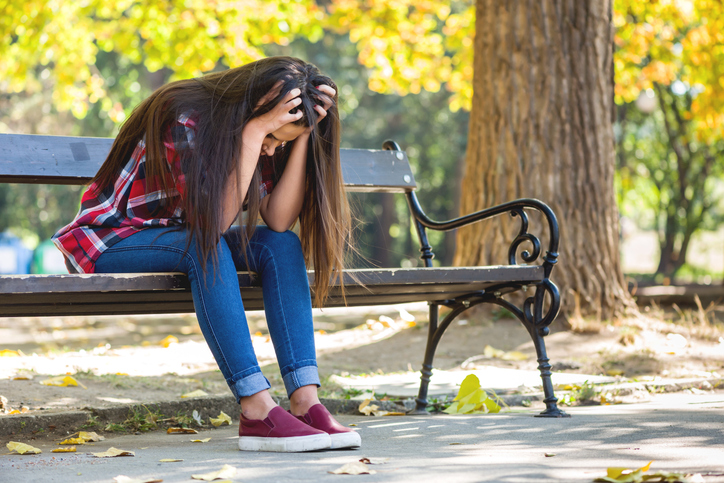
Winter is coming, the days are getting shorter, it’s getting cold, and the visible life is leaving the trees and flowers. Cold and flu season is upon us as the sun is less available and vitamin D levels drop. October seems to be the perfect month to highlight how important it is to support each other and ourselves during the season that brings with it seasonal affective disorder (S.A.D). Mental health is something that is often not discussed and, in my opinion, needs to be the primary focus of healthcare.
We are buried in our screens, bombarded with videos and pictures of fake perfection, given appalling nutritional options, and being expected to be “on call” for everyone with cell phones, watches, and computers. It is no wonder that anxiety has risen at an alarming rate and a suicide occurs once every 11 minutes.
History of Diagnosing Mental Illness
We as a world and specifically the United States have come a long way since the 1840’s when the US census termed those with mental illness “the insane and idiotic”. Naturally, as humans, our instinct was to put labels on behaviors and the origins of the Diagnostic and Statistical Manual of Mental Disorders (DSM) date back to 1840 when the government began collecting data on mental illness. Forty years later, the census expanded to feature these seven categories: “mania, melancholia, monomania, paresis, dementia, dipsomania and epilepsy.” Over 100 years later, in 1946 the National Mental Health Act was passed and the National Institue of Mental Health was created. It wasn’t until the 1990’s that mental health became a more serious topic of conversation and more treatment options in the form of prescription medications were made available.
Understanding Cause and Effect
While it is wonderful that people who struggle with depression, anxiety, and other mental illnesses have been validated more than previous decades, there seems to be an issue with our understanding of cause and effect. Research seems to be directed toward medicating people without considering pharmacogenomics (how a person’s genetic makeup influences how they may respond to the drug), a person’s social situation, nutritional status, toxic exposures, and exercise routines, among many other factors.
I find it ironic that during the covid19 pandemic suicide rates fell by 5%. One could argue that there was quite a bit of stress relieved by being forced to stay home, not having to “look your best”, or go to the latest and greatest event. I know I enjoyed wearing slippers instead of uncomfortable shoes that look good. Durning this time, some people were even given more money in the form of government assistance to stay home than they would ordinarily receive to go to work. Traffic was reduced. Skies were cleared of smog. People had time to exercise and seeing loved ones was a treat. Life just slowed down for most and many people were given the opportunity to learn to cook, dust their houses (environmental allergies are a serious issue), read a book, take a bath, etc.
The Importance of Slowing Down
While I am not saying that stress causes all mental illness, I do think that it is a modern issue that we have exacerbated. In 2022 when people started going back to work, suicide rates went to an all-time high and exceeded the 37 percent increase seen from 2000 to 2018 (oddly enough around the time that the age of the internet was in full effect). While I could go on about DoorDash, TikTok, and Amazon making bad ideas into bad decisions, I will say that we need to slow down and take care of each other and ourselves. We must become educated on how the choices we make affect others and our own bodies.
Season Affective Disorder and Taking Action
Someone very close to me struggled with SAD (seasonal affective disorder) every year. Finally, with the proper dose of vitamin D before winter set in and some changes in his lifestyle, he reported feeling no depression for the past 2 years. It has taken decades, dare I say a centuries, to understand what little we do about mental illness. However, I believe that if medical professionals take a deeper dive into the whole person, we stand a better chance of helping those that feel hopeless to heal. To become the best version of themselves that they are able to be. For any teenager out there that might be reading this: no one can make you feel bad about yourself without your consent.
You never know when someone needs you. Take a moment away from the flashing lights, phones, and social media to connect with those around you.
References
Centers for Disease Control and Prevention. (n.d.). Suicide data and statistics. Centers for Disease Control and Prevention. https://www.cdc.gov/suicide/facts/data.html#cdc_data_surveillance_section_4-suicide-rates
American Psychiatric Association. (1952) The Diagnostic and Statistical Manual of Mental Disorders DSM https://ia600601.us.archive.org/8/items/dsm-1/dsm-1952.pdf
Kessler, R. C., Demler, O., Frank, R. G., Olfson, M., Pincus, H. A., Walters, E. E., Wang, P., Wells, K. B., & Zaslavsky, A. M. (2005, June 16). Prevalence and treatment of mental disorders, 1990 to 2003. The New England journal of medicine. https://www.ncbi.nlm.nih.gov/pmc/articles/PMC2847367/
U.S. Department of Health and Human Services. (n.d.). Mental illness. National Institute of Mental Health. https://www.nimh.nih.gov/health/statistics/mental-illness