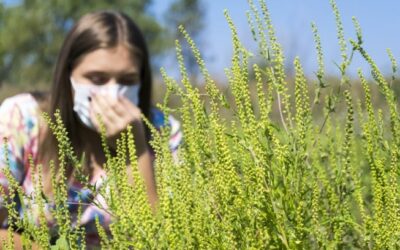

Fall allergies start to appear in August as people start sneezing from ragweed and other weeds. A ragweed allergy is also known as hay fever, or seasonal allergic rhinitis. It is estimated that ragweed pollen allergy affects 23 million people.¹
The drier the weather, the worse the pollen count. But hot weather, high winds and heavy rains can also create a perfect growing environment for ragweed plants. Ragweed allergies usually peak in mid-September as one plant can produce one billion grains of pollen.
So, just when you want to enjoy an outdoor hike or plant some mums, ragweed allergy symptoms can make you miserable.
Symptoms of Ragweed Allergy
- Itchy or watery eyes, or generally irritated eyes
- Runny nose or nasal congestion, post nasal drainage
- Sneezing
- Headache
- Rashes or hives on the skin
- Itchy throat or nose
- Fatigue or lack of energy
- If you have asthma, ragweed allergy can cause asthma-like symptoms
Note, allergies do not cause fever. Due to COVID-19, if you experience symptoms above with fever please call your physician.
Other Ragweed-Related Issues to Watch Out For
Some people with a ragweed allergy can also experience problems with certain foods or teas such as echinacea or chamomile.
Many plants that are in the same family can often produce allergic reactions due to overlap in their chemical composition. A very good example of this is the Asteraceae family which includes ragweeds, a cause of roughly 50% of all of the cases of allergic rhinitis in the United States. Chamomile comes from the same family as ragweed and can cause similar allergic symptoms in those with a ragweed allergy, so if you suspect ragweed is an issue for you, it is best to avoid this tea. (See “Why Chamomile and Echinacea May Not Be Good For You.”)
Tips to Reduce Ragweed Symptoms
- Check pollen counts in your area and stay inside when counts are highest. Ragweed pollen is usually highest in the morning. (The Weather Channel app has an Allergy Forecast)
- Keep windows and doors closed at home and in the car.
- Change clothes after working outside or being outside for any length of time.
- Shower and wash hair at night to remove ragweed pollen.
- Pets can track pollen inside, so wash your hands after petting the dog who has been outside.
- 3000 mg. of vitamin C as needed, glutathione and quercetin are helpful.
- As soon as the season starts take over-the-counter decongestants/antihistamines/nasal sprays as prescribed and do not wait until symptoms are full-blown.
It is possible to desensitize a person to the Asteraceae family using various natural methods including auricular acupuncture, gut healing protocols, and even stress reduction techniques to help calm the system.
Strengthening the immune system with a high quality diet of fresh vegetables and good quality protein, and drinking lots of filtered water will help to reduce inflammation as the body reacts to the allergen.
Ragweed Allergy Treatment
Allergy testing and treatment for ragweed can be done easily using a needle-free, non-invasive approach. I would suggest testing for an allergy to ragweed and various members of the Asteraceae family, and possibly mold, another fall allergy, prior to beginning any desensitization programs. Often, eliminating the allergy to ragweed can decrease the likelihood of reacting to other members of the same plant family.
Once we test, then we can treat using drops under the tongue, or oral immunotherapy, which is finding the neutralizing dose of allergy serum. The neutralizing dose becomes stronger with repetitive doses of serum. As the serum gets stronger, the patient gets relief as allergy symptoms usually subside over a period of months.
References: