Oral cancer is common, and not just for smokers.
April is Oral Cancer Awareness Month, so now is a good time to learn the signs and get screened as part of your holistic dental check up.
More than 43,000 Americans will be diagnosed with oral cancer this year.
According to the National Cancer Institute this type of cancer is more common than leukemia, skin melanoma, and cancers of the brain, liver, bone, thyroid, ovaries, and cervix. It is a major cause of disfigurement and death in the United States.
Oral cancer includes cancers found in the mouth, on the tongue, lips, throat, parts of the nose, and larynx. Seventy five percent of these cancers are caused by tobacco and alcohol. Infection with the sexually transmitted human papillomavirus (HPV) has been linked to a subset of oral cancers.
Current Statistics:
- One American dies every hour from oral cancer
- The survival rate has not changed for over 40 years
- Currently, 70% of oral cancer lesions are identified in late stages
- If detected early, oral cancer has a survival rate of 80-90%
- The risk of oral cancer occurs in men more than women, is higher in African American men, and more often in people over the age of 40.
Oral Cancer Signs and Symptoms:
- A sore in the mouth that will not heal
- A chronic sore throat
- A red or white patch that does not go away after 2 weeks
- Difficulty chewing or swallowing
- A chronic sore throat
- Numbness of the tongue
- Changes in the voice
- A lump or mass in the neck
- Weight loss
- Bad breath
- Pain in one ear without hearing loss
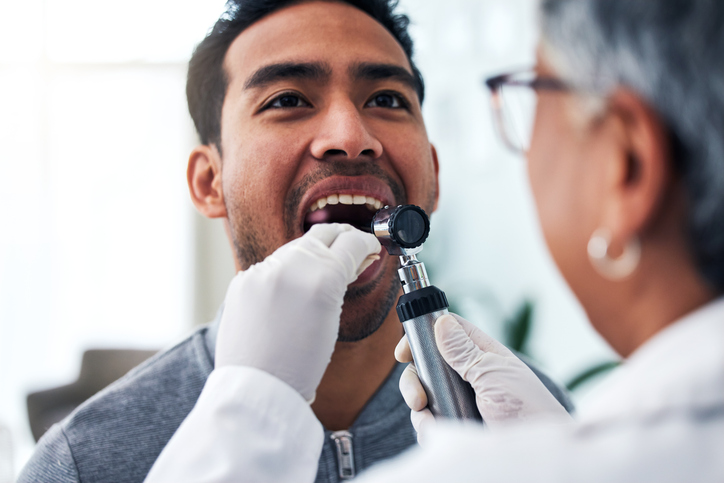
If a person has any of these symptoms for more than 2 weeks they should see their holistic dentist for a cancer exam. In addition to the dentist’s visual examination, at NIHA we use Vizilite® Plus, a technology to assist in the early detection of oral abnormalities. Abnormal areas that might not be seen in a conventional examination are more clearly identified with Vizilite. These areas can then be evaluated and monitored. The test is quick and painless and is particularly important for patients with increased risk factors for oral cancer, such as tobacco use or excessive alcohol use. However, often the above symptoms do not mean cancer and could mean an infection or another problem. The important thing is that the symptoms are checked because early detection and treatment improves survival rate and can mean the difference between life and death!