
After a big storm everybody has to go out into the cold and do hard labor. Shovelful after shovelful of wet, heavy snow is thrown onto a big pile so we can get to our cars, get the kids to school or even just open the front door.
Unfortunately, shoveling snow is not a normal movement for us and can result in injuries we should not ignore, but many of us do. As soon as the pain hits, we start to get those loving reminders from our spouses to go have it looked at, but most of the time it falls on deaf ears. Some ibuprofen, Tylenol, heat and rest is what most people do. Then a week later you may be feeling OK. If it doesn’t go away most people continue to tolerate it until it resolves on its own or turns into something worse, and that can be a mistake.
Flexing and Twisting = Low Back Pain
Low back pain is usually the first symptom associated with shoveling. Flexing forward and twisting is the #1 movement that has caused everything from back spasms to herniated discs. I have seen patients where they went to pick up a pencil at the side of their seat and as they sat up they heard a pop, which can mean a herniated disc. We are talking about a pencil! How can that hurt your back? Well, it can- from simply flexing forward and twisting.
When you add weight, like snow, to this movement, it exponentially loads the lower back by placing up to 1000 pounds of pressure onto ligaments, discs, bone and muscles. Now repeat this several times during a couple hours of shoveling and you could have a problem. It is normal to have some muscle soreness after shoveling. If pain or muscle tension continues past 3 days you likely are experiencing a functional medical issue you should address with an experienced chiropractor. The mechanics of your low back, how your muscles fire or how your joints move, likely have poor functionality and should be corrected. Treatment of these areas can be provided by a Chiropractor, Manual Physical Therapist, Massage Therapist, or Acupuncturist. Moving the joints back into place, applying therapies to the muscles, dry needling and specific stretches can do the trick to make you feel better.
Other areas that can experience similar pain include the shoulders, forearms, upper back and legs. All of these are helped with two different stretches. They should be done before and after shoveling, and the following days after.
Spinal Rotation Stretch:
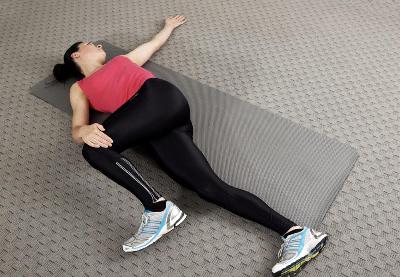
-Lay near edge of bed, or this can also be done on the floor
-Bring one leg over body so that it hangs down towards floor
-The same side arm extends out straight, the other arm puts downward pressure on knee
-Stretch for 10 seconds; on exhale, relax and push down on knee
-Repeat 2 more times, the repeat with opposite legs 3 times
-Perform 1-3 times per day
Foam Roller Upper Body Stretch:
This is a great upper body stretch and is especially needed for those sitting at a computer all day.
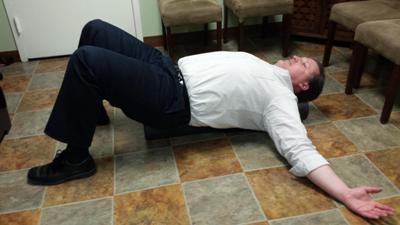
Lay on a 36 inch long foam roller (can get on Amazon) lengthwise along the spine with head supported for 5 minutes. Arms can start low at your side with the ultimate goal of bringing them up to create a plus sign.
With just these two basic stretches your back, shoulders and arms should feel better! And remember to do these before the next snow storm.
I recommend to all my patients to come in for a tune up once or twice a month to keep the body in balance. But in fact, anyone over the age of 50 would benefit from this advice. As the body ages we must work to maintain flexibility, balance, strength, good posture and muscle tone for the long haul!
CALL 202-237-7000 to schedule with Dr. Coy.